
Dermal Fillers — Restore Volume, Define Contours, and Look Like Yourself Again
What Are Dermal Fillers?
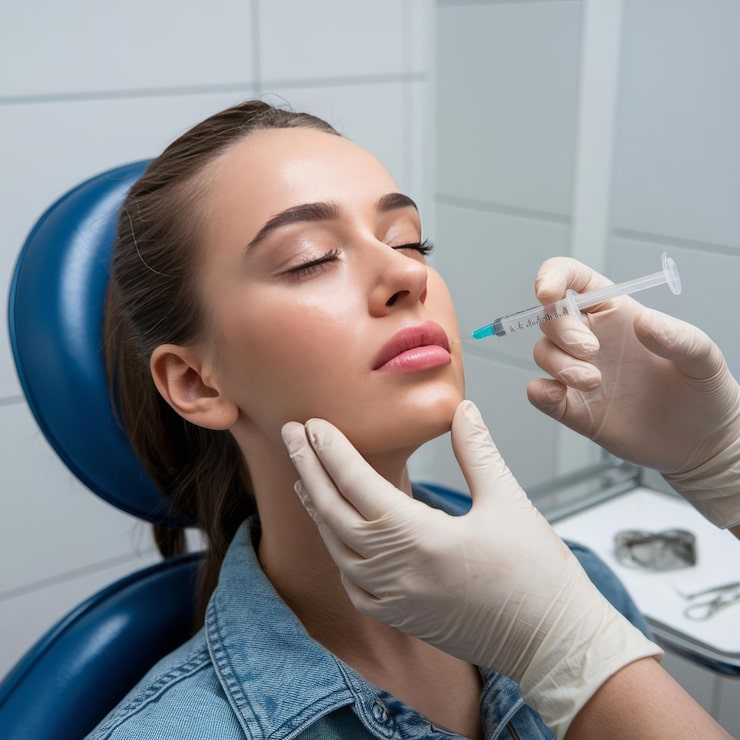
How Dermal Fillers Work
Step 1
Filler product selected for your area and anatomy
Step 2
Injected precisely into target tissue at the correct depth
Step 3
Hyaluronic acid integrates and attracts water to the area
Step 4
Volume builds gradually over 48 to 72 hours as swelling settles
Dermal Fillers vs Botox — Understanding the Difference
- Restores or adds volume
- Addresses static lines present at rest
- Lips, cheeks, chin, jawline, under-eyes, folds
- Immediate visible result
- Results last 6 to 18+ months depending on area and product
- Relaxes specific facial muscles
- Addresses dynamic expression lines
- Forehead, frown lines, crow’s feet, jaw, neck
- Results visible in 3 to 14 days
- Results last approximately 3 to 4 months on average
HA Fillers vs Biostimulatory Fillers
- Adds volume directly on injection
- Immediate, visible result
- Results typically last 6–18 months
- Reversible with hyaluronidase
- Stimulates your own collagen production
- Gradual result, building over weeks to months
- Results can last 2 years or longer
- Usually delivered as a series of sessions
Benefits of Dermal Filler Treatment
Immediate, Visible Results
Volume and contour improvements are visible immediately after treatment. The result continues to refine over 48 to 72 hours as any initial swelling settles.
Restores What Time Has Changed
As facial volume naturally diminishes with age, fillers replenish it in the specific areas that have deflated, restoring a refreshed, natural appearance.
Highly Personalized
The product used, the volume injected, the placement, and the depth are all specific to your anatomy and your goals. There is no universal protocol.
Reversible With Hyaluronidase
Hyaluronic acid fillers can be dissolved with an enzyme called hyaluronidase if needed, reducing the long-term commitment associated with the treatment.
No Significant Downtime
Most clients return to normal daily activities within 24 to 48 hours. Mild bruising or swelling is the most common post-treatment experience.
Natural-Looking Results When Done Well
Filler treatment applied with appropriate volume and precise placement produces results that look naturally refreshed and balanced, not overdone.
Dermal Filler Treatment Areas
What this area involves
Lip fillers restore diminished volume, define the vermillion border, correct mild asymmetry, or add proportionate fullness for naturally thin lips.
What we focus on
Our approach is consistently conservative: naturally full, balanced lips, not a visible or exaggerated result. Starting with less and building gradually is our standard approach for first-time clients.
What this area involves
The cheeks and midface create the lift and support that defines the upper and middle third of the face. Volume loss here flattens the midface and deepens nasolabial folds.
What we focus on
Restoring cheek and midface volume often creates the most comprehensive improvement of any single area. We use firmer, structured filler injected at a deeper tissue level for appropriate lift.
What this area involves
The lines running from the nose to the corners of the mouth deepen with age as midface volume reduces and gravity causes progressive tissue descent.
What we focus on
Treating the fold in isolation, without addressing midface volume above it, often looks less natural. We assess whether midface treatment should accompany direct fold treatment for a balanced outcome.
What this area involves
A chin that lacks projection can affect the perceived harmony of the profile. Chin filler increases projection, length, and definition, improving overall lower face balance.
What we focus on
Chin filler is a structural treatment. We use firmer products injected at a supraperiosteal depth for precise projection, always aiming for facial balance rather than a chin that draws attention to itself.
What this area involves
Jawline filler creates definition along the mandible, improves jaw angle and projection, and supports a more structured lower face silhouette, often combined with chin enhancement.
What we focus on
We inject at a supraperiosteal depth along the mandible to create definition without overcorrection. Subtle, incremental building is our consistent approach.
What this area involves
The tear trough is the groove between the lower eyelid and upper cheek, creating a shadow that makes the under-eye area look hollow or tired.
What we focus on
We use soft, low-viscosity products appropriate for this delicate tissue and inject conservatively and precisely. A conservative first treatment with review is our standard approach.
Who Is a Good Candidate for Dermal Fillers?
- Have noticed a reduction in facial volume in the cheeks, under-eyes, lips, or midface
- Have deepened nasolabial folds, smile lines, or marionette lines visible at rest
- Want to enhance the structure and definition of the chin or jawline
- Want to increase lip volume, definition, or symmetry
- Are seeking a natural-looking, non-surgical alternative to facial volumizing
- Have realistic expectations about the nature and longevity of results
- Are pregnant or breastfeeding
- Have an active skin infection, inflammatory skin condition, or cold sore in the planned treatment area
- Have a known allergy to hyaluronic acid or any component of the filler formulation
- Are taking anticoagulant medications (timing adjustments may apply, discussed at consultation)
- Are seeking permanent or surgical outcomes from an injectable treatment
What Happens During Your Filler Appointment
Before and After Your Filler Treatment
- Avoid alcohol for 24 to 48 hours before treatment, as it can significantly worsen bruising.
- Avoid aspirin, ibuprofen, naproxen, and other NSAIDs for 5 to 7 days before treatment where medically safe. Confirm with your physician before stopping any regular medication.
- Avoid fish oil, high-dose vitamin E, and other blood-thinning supplements for 5 to 7 days before treatment.
- If you have a history of cold sores and the treatment area is around the mouth, inform your specialist at booking.
- Arrive with clean skin, free of makeup, moisturisers, and skincare products in the treatment areas.
- Stay well-hydrated in the days before treatment to support filler integration.
- Avoid vigorous skin treatments such as laser, peels, or microneedling in the treatment areas for two weeks before your appointment.
- Apply a clean, cool compress gently to bruising or swelling in the first 24 to 48 hours. Do not press or massage the treated areas.
- Avoid touching, pressing, or massaging the treated areas for at least 24 hours after treatment.
- Sleep in an elevated position on the first night if possible, to reduce swelling.
- Avoid vigorous exercise for 24 to 48 hours after treatment.
- Avoid alcohol for 24 hours after treatment.
- Avoid heat exposure, including saunas, steam rooms, and hot baths, for 24 to 48 hours.
- Avoid dental procedures for 2 weeks after lip or perioral filler treatment.
- Avoid facials, massages, and manual manipulation of the treated areas for at least 2 weeks.
- Do not assess your final result before 2 weeks post-treatment.
- Protect the treated area from direct sun exposure and apply SPF consistently.
Results and Timeline
When Will I See Results?
Volume improvement is visible immediately. As initial swelling reduces over 48 to 72 hours, the result settles and refines. The most accurate assessment is at the 2-week mark.
Do Fillers Look Natural?
When the right product is selected and applied at the correct depth and volume, results look entirely natural. Overcorrection is the primary cause of unnatural results — our default is conservative and incremental.
Safety, Side Effects, and What to Know
- Mild bruising at the injection site, resolving within 5 to 10 days. More likely in higher-vascular areas such as the lips and under-eyes.
- Swelling and mild tenderness, typically most noticeable in the first 24 to 72 hours and resolving over 1 to 2 weeks. Lip swelling can be more pronounced and is entirely normal.
- Redness at the injection points, typically resolving within hours.
- Mild asymmetry as the filler settles, most often self-correcting by the 2-week review.
- Firmness or small nodules in the treated area as the filler integrates, usually resolving as tissue adjusts.
- Tyndall effect, a faint blue or grey tinge from superficially placed filler, more common under the eyes. Treatable with hyaluronidase.
When to Contact the Clinic
Contact DermEsthetics immediately if you experience severe or unexpected pain, skin blanching, significant discolouration, or any symptoms that concern you. Our team will advise on next steps promptly.
Reversibility
Hyaluronic acid fillers can be dissolved using an enzyme called hyaluronidase if needed, whether due to an undesired result, a complication, or a decision to reverse treatment. Our team will confirm the product used and discuss reversibility as part of informed consent.
Why Choose DermEsthetics for Your Filler Treatment
Full-Face Assessment Before Treatment
We assess your entire face, not just the area you have come in for. Filler treatment that ignores surrounding anatomy often looks unnatural. Our approach begins with the full picture.
Conservative, Incremental Approach
We prefer to start with less and add at a review appointment than to overcorrect in a single session. Natural-looking results are built gradually, not applied maximally.
A 2-Week Review as Standard
Our team schedules a review appointment at 2 weeks, once swelling has resolved and the filler has fully integrated. It is a standard part of the process, not an optional extra.